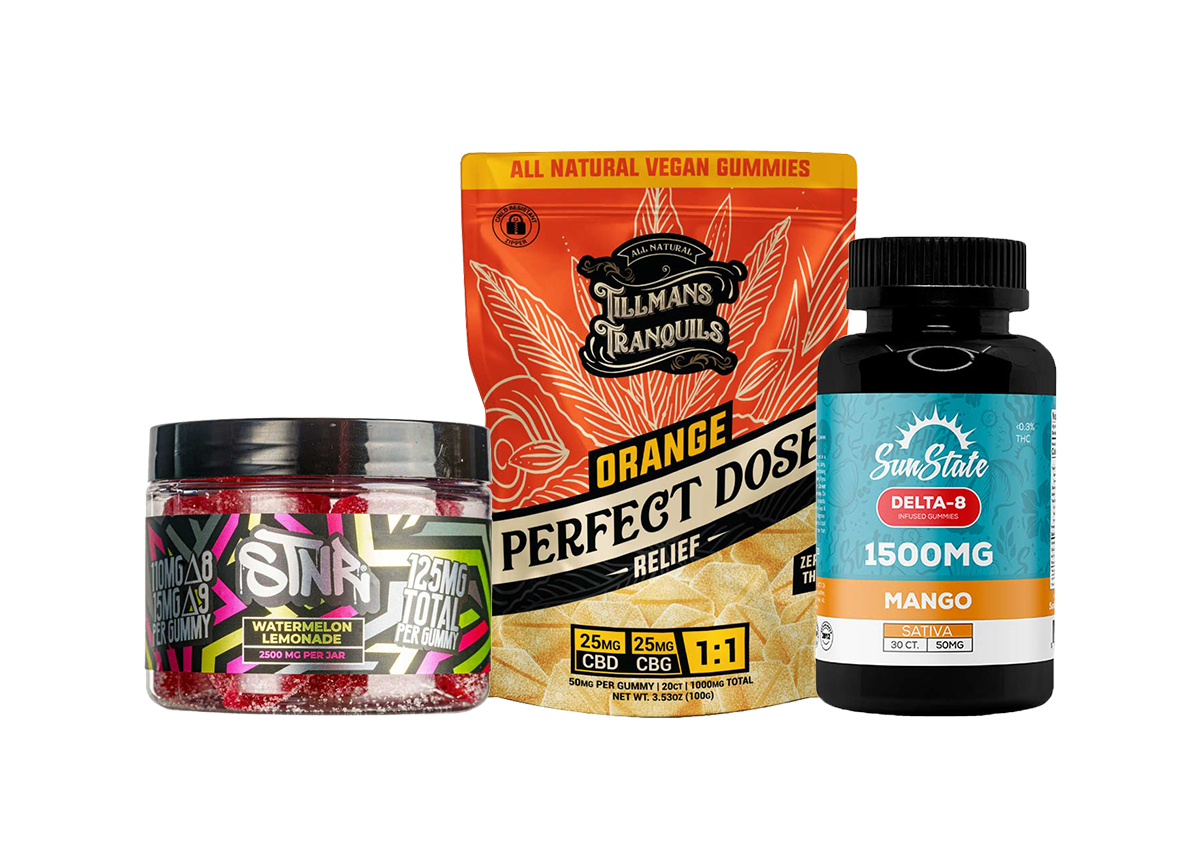
Key Takeaways
-
Delta 9 is generally stronger than Delta 8 milligram for milligram.
-
Delta 9 may provide pain relief at lower doses.
-
Delta 8 is milder and smoother.
-
Balanced THC + CBD formulations may improve overall comfort.
-
The best choice depends on pain severity, tolerance, and time of day.
When people search for THC gummies for pain relief, one question appears again and again:
Should I choose Delta-8 or Delta-9?
Both cannabinoids interact with the body’s endocannabinoid system. Both may support discomfort relief. But they differ in strength, intensity, and overall experience.
If you are comparing Delta 8 vs Delta 9 for pain, this guide explains:
-
How each cannabinoid works
-
Which one is stronger
-
How they differ for chronic pain, nerve pain, and inflammation
-
Dosing differences
-
Side effects
-
When to choose one over the other
By the end, you will understand which option best fits your needs, rather than guessing.
Where Do Delta 9 Edibles Fit Into the Comparison?
For many consumers, the Delta 8 vs Delta 9 decision also comes down to product format. Delta 9 edibles, including Delta 9 gummies, offer a convenient way to use THC without smoking or vaping. Because edibles are consumed orally, their effects typically take longer to appear and may last longer than inhaled THC.
This difference matters when considering Delta 9 edibles for pain. Someone looking for longer-lasting support may prefer an edible format, while someone seeking effects that begin quickly may prefer another delivery method. Individual responses still vary based on dose, metabolism, tolerance, food intake, and the specific formulation.
When comparing Delta 8 gummies and Delta 9 gummies, strength is only one factor. Onset time, serving size, cannabinoid combination, and how long you want the effects to last can also influence which option feels more appropriate.

What Is the Difference Between Delta 8 and Delta 9?
Delta 8 THC and Delta 9 THC are both forms of tetrahydrocannabinol. Their molecular structures are nearly identical. The difference lies in the placement of a double bond in the carbon chain. That small structural difference changes how strongly each compound binds to CB1 receptors in the brain.
Delta 9 binds more strongly.
Delta 8 binds more moderately.
As a result, Delta-9 typically produces stronger psychoactive effects.
If you want to understand how potency compares across cannabinoids, you may find our guide on, “THCP vs THCA explained” helpful for understanding relative strength differences.
How THC Helps With Pain
Both Delta 8 and Delta 9 interact with CB1 receptors in the central nervous system. These receptors influence how the brain interprets pain signals.
THC may:
-
Reduce pain perception intensity
-
Relax muscles
- Support stress reduction
- Influence inflammation signaling
THC does not remove the root cause of pain. Instead, it changes how strongly discomfort is experienced.

Delta 9 for Pain Relief
Delta 9 THC is the more extensively studied cannabinoid for pain support. Many people choose Delta 9 for moderate to severe discomfort.
Delta 9 may be helpful for:
-
Chronic back pain
-
Joint pain
-
Arthritis discomfort
-
Muscle soreness
- Nerve-related pain
-
Pain that disrupts sleep
Because Delta 9 binds strongly to CB1 receptors, lower doses may produce noticeable effects.
However, stronger binding also means higher doses may increase the risk of anxiety in sensitive individuals.
If anxiety overlaps with your discomfort, you may want to review our guide on “Gummies for Anxiety” to better understand how THC affects stress response.
Why Do People Choose Delta 9 Edibles for Pain?
Delta 9 edibles have become a popular option for people who prefer a measured serving instead of inhaling THC. Gummies and other edible products can make it easier to understand how many milligrams of Delta 9 THC are in each serving and maintain a consistent routine.
For people exploring THC gummies for discomfort, Delta 9 edibles may be appealing because their effects can be longer-lasting than inhaled cannabis. However, longer-lasting effects also mean that careful dosing is especially important. Taking additional THC before the first serving has fully taken effect can lead to a much stronger experience than intended.
It is also important to distinguish general wellness use from medical treatment. THC products should not be treated as a replacement for evaluation or treatment of an underlying pain condition. Anyone managing persistent, unexplained, or worsening pain should discuss appropriate options with a qualified healthcare professional.
Delta 8 for Pain Relief
Delta 8 is described as producing milder psychoactive effects than Delta 9.
Some users report that Delta 8 feels:
-
Smoother
-
Less intense
-
Easier to use during the daytime
- Less likely to cause anxiety
Because Delta 8 binds to CB1 receptors less strongly, higher doses are sometimes required to achieve similar changes in pain perception.
Delta 8 may be preferred for:
-
Mild to moderate pain
-
Daytime discomfort
-
Individuals sensitive to stronger THC effects

Which Is Stronger for Pain: Delta 8 or Delta 9?
Delta-9 is stronger milligram-for-milligram.
- This does not make it better. It means it may:
-
Produce stronger effects at lower doses
-
Change pain perception more noticeably
- Increase psychoactive intensity
If your pain is severe, Delta 9 may provide more relief.
If your pain is manageable but you want a lighter experience, Delta 8 may feel more balanced.
Delta 8 vs Delta 9 for Chronic Pain
Chronic pain requires consistent management rather than occasional use.
For chronic discomfort:
-
Lower, steady doses work better than high spikes
-
Combining THC with CBD may improve balance
- Consistency may matter more than strength
CBD may help with inflammation-related discomfort, which is why products combine THC and CBD.
You can explore balanced options in our guide, “Best Gummies for Pain Relief.”
Delta 9 Edibles for Chronic Discomfort
People researching Delta 9 edibles for chronic pain are often looking for something that provides longer-lasting effects without requiring repeated use throughout the day. Because edible THC is processed differently from inhaled THC, the experience may build more gradually and remain noticeable for several hours.
That slower timeline makes planning especially important. Rather than judging an edible within the first few minutes, users should allow enough time to understand how a serving affects them before considering more. A consistent, lower-dose approach may also make it easier to evaluate whether Delta 9 gummies fit into an individual wellness routine.
Products that combine Delta 9 THC with CBD are another option consumers may encounter. The presence of multiple cannabinoids changes the overall formulation, so shoppers should compare cannabinoid amounts per serving rather than looking only at the total milligrams printed on the package.
Delta 8 vs Delta 9 for Nerve Pain
Nerve pain can feel sharp, burning, or electric. Some users report that Delta 9’s stronger receptor interaction provides more noticeable relief for nerve-related discomfort.
Others prefer Delta 8 because it allows them to function more clearly during the day.
Response varies significantly from person to person.
Delta 8 vs Delta 9 for Inflammation
THC influences inflammation signaling indirectly. However, CBD is also associated with inflammation support.
For inflammation-related discomfort, balanced THC + CBD formulations may provide broader support than THC alone.
Dosing Differences Between Delta 8 and Delta 9
Because Delta 9 is stronger, dosing typically differs.
Delta 9 general guidelines:
-
Beginners: 2.5 mg to 5 mg
-
Moderate users: 5 mg to 10 mg
Delta 8 general guidelines:
-
Beginners: 5 mg to 10 mg
-
Moderate users: 10 mg to 20 mg
Always start with the lowest effective dose.
For detailed dosing support, see “How Much THC to Take.”
How Long Do Delta 9 Edibles Take to Kick In?
One of the most common questions about Delta 9 edibles is how long they take to work. Unlike inhaled THC, edible THC does not usually produce immediate effects. The onset can vary considerably from person to person, and factors such as metabolism, serving size, recent meals, tolerance, and product formulation can all influence the experience.
Because the effects are delayed, taking another serving too quickly is one of the easiest ways to unintentionally consume more THC than planned. The CDC notes that edible cannabis can have delayed or unpredictable effects, which makes patience particularly important when using THC gummies or other edible products.
How Long Do Delta 9 Edibles Last?
Delta 9 edible effects may remain noticeable for several hours. The exact duration depends on the person and the amount consumed, and stronger servings can produce longer-lasting effects.
This extended duration is one reason some consumers consider Delta 9 gummies for nighttime discomfort or situations where longer-lasting effects are preferred. It is also why users should avoid driving, operating machinery, or performing activities that require full coordination while impaired.
Daytime vs Nighttime Use
Many people structure their THC use around the time of day.
Delta 8 may be preferred for daytime use because it feels milder.
Delta 9 may be preferred in the evening when stronger relaxation is desired.
If pain interferes with sleep, you may want to explore “Delta 9 gummies for sleep” for more detailed nighttime guidance.
Are Delta 9 Edibles Better for Daytime or Nighttime Use?
Whether Delta 9 edibles are better during the day or at night depends largely on dose, tolerance, and the individual response to THC. Some people reserve Delta 9 gummies for the evening because the stronger psychoactive effects may interfere with concentration or daytime responsibilities.
People who want a milder daytime experience may prefer a lower serving, Delta 8, or a formulation that includes CBD. Regardless of the product, first-time users should learn how THC affects them in a safe environment before incorporating it into a regular daytime or nighttime routine.
Side Effects: Delta 8 vs Delta 9
Both cannabinoids may cause:
-
Dry mouth
-
Increased appetite
-
Drowsiness
- Dizziness
Delta 9 is more likely to cause anxiety at higher doses.
Delta 8 may feel milder, but excessive dosing can still produce strong effects.
What Happens If You Take Too Much Delta 9 Edible THC?
Taking more Delta 9 THC than intended can result in an uncomfortable experience. Higher THC exposure can increase intoxicating effects and may contribute to anxiety, dizziness, confusion, impaired coordination, or excessive drowsiness in some users.
Edibles deserve additional caution because their delayed effects can make it tempting to take a second serving too soon. The CDC specifically identifies edibles and high-THC products as having the potential for delayed or unpredictable effects and a greater risk of overconsumption.
Delta 9 gummies and other THC edibles should also be stored securely away from children and pets. Edible cannabis products can resemble ordinary candy or snacks, which increases the risk of accidental ingestion.
Tolerance Considerations
Frequent high-dose THC use may increase tolerance.
To reduce tolerance risk:
-
Use the lowest effective dose
-
Avoid rapid dose escalation
- Consider occasional breaks
Tolerance management helps maintain long-term effectiveness.
How to Choose Delta 9 Edibles
Not every Delta 9 edible contains the same amount of THC or uses the same formulation. When comparing Delta 9 gummies, consumers should look beyond flavor or total package strength and check the amount of Delta 9 THC in an individual serving.
Other considerations include whether the product contains CBD or additional cannabinoids, the recommended serving size, ingredient preferences, and whether independent laboratory testing information is available. Clear labeling is especially useful for people trying to maintain consistent THC intake instead of estimating how much they are consuming.
Beginners may also want products that make lower-dose servings practical. Starting with a smaller amount provides an opportunity to assess sensitivity before deciding whether more THC is necessary.
Legal Differences
Hemp-derived Delta 8 and Delta 9 products must comply with federal limits under the 2018 Farm Bill. State laws vary.
2026 Delta 9 Hemp Legal Update
The legal landscape for hemp-derived Delta 9 products is changing. While the 2018 Farm Bill established the 0.3% Delta 9 THC dry-weight standard referenced above, federal legislation enacted in 2025 is scheduled to introduce a substantially narrower definition of legal hemp beginning in November 2026. The new framework includes a total-THC standard and restrictions that are expected to affect many intoxicating hemp-derived products currently sold as gummies, edibles, and beverages.
State rules can also be more restrictive than federal requirements and may change independently. Consumers shopping for Delta 8 or Delta 9 edibles should therefore check the laws that apply in their state rather than assuming that a product sold online is legal everywhere.
Expanded Frequently Asked Questions
Which is stronger for pain relief, Delta 8 or Delta 9?
Delta 9 THC is stronger than Delta 8 THC milligram for milligram. Because Delta 9 binds more strongly to CB1 receptors in the brain, it typically produces more noticeable effects on pain perception at lower doses. Delta 8 is milder and may require higher doses to achieve similar pain relief.
Is Delta 9 better than Delta 8 for chronic pain?
Delta 9 is often preferred for moderate to severe chronic pain because it produces stronger effects. However, some people prefer Delta 8 for daily management because it may feel smoother and less mentally intense. The best option depends on pain severity and personal tolerance.
Is Delta 8 better for mild pain?
Delta 8 may be a good option for mild to moderate discomfort, especially if you are sensitive to THC. Many users report that Delta 8 provides relaxation and pain support without the stronger psychoactive intensity of Delta 9.
Does Delta 8 or Delta 9 work better for nerve pain?
Some users report that Delta-9 works better for nerve-related pain due to its stronger receptor affinity. However, the response varies. Individuals sensitive to Delta 9 may prefer Delta 8 during the day and Delta 9 at night for stronger relief.
Which is better for inflammation, Delta 8 or Delta 9?
Both Delta 8 and Delta 9 influence inflammation signaling indirectly through the endocannabinoid system. However, CBD is more commonly associated with inflammation support. For inflammation-related discomfort, a THC + CBD combination may be more effective than THC alone.
Can I use Delta-8 during the day and Delta-9 at night for pain?
Yes. Some people use Delta 8 during the day for milder relief and Delta 9 at night for stronger relaxation and sleep support. This approach may help balance function and comfort throughout the day.
How much Delta 8 should I take for pain?
Most beginners start with 5-10 mg of Delta 8. Moderate users may use 10-20 mg. Always begin with the lowest effective dose and adjust gradually based on response.
How much Delta 9 should I take for pain?
Most beginners start with 2.5-5 mg of Delta-9. Moderate users may use 5-10 mg. Higher doses may increase the risk of anxiety or grogginess.
For a detailed breakdown, see how much THC to take.
Which lasts longer for pain relief, Delta 8 or Delta 9?
Both typically last between 4 and 8 hours when taken as gummies. Duration depends more on dose, metabolism, and tolerance than on the specific cannabinoid.
Which one has fewer side effects?
Delta 8 is often described as causing fewer anxiety-related side effects compared to Delta 9. However, high doses of either cannabinoid may cause dizziness, dry mouth, or sedation.
Will Delta-8 or Delta-9 show up on a drug test?
Yes. Both Delta 8 and Delta 9 can produce positive THC drug test results because standard tests detect THC metabolites rather than specific cannabinoid types.
Is Delta 8 safer than Delta 9?
Delta 8 is not necessarily safer. It is milder in psychoactive intensity, but safety depends on dose, frequency, and product quality. Using lab-tested products and responsible dosing is important for both.
Which is better for arthritis pain?
Some users report that Delta 9 provides stronger relief from joint-related discomfort due to its potency. Others prefer balanced THC + CBD formulas for arthritis-related inflammation.
You can explore options in our guide on best gummies for pain relief.
Which works faster for pain, Delta 8 or Delta 9?
Onset time depends more on formulation than cannabinoid type. Traditional gummies typically take 30 to 90 minutes to activate. Fast-acting formulas may work sooner.
Can I build tolerance to Delta-8 or Delta-9?
Yes. Regular high-dose use of either cannabinoid may increase tolerance. Using the lowest effective dose and taking occasional breaks may help maintain sensitivity.
Is Delta 9 too strong for beginners?
Delta 9 can feel strong for beginners at higher doses. Starting at 2.5-5 mg allows new users to evaluate sensitivity before increasing.
What are Delta 9 edibles?
Delta 9 edibles are food or edible products containing Delta 9 THC. Gummies are one of the most common formats, but Delta 9 may also be found in other edible products. Because THC is consumed orally rather than inhaled, the effects generally take longer to appear.
Are Delta 9 gummies stronger than Delta 8 gummies?
When comparing equal amounts of THC, Delta 9 is generally considered more psychoactively potent than Delta 8. However, the actual experience also depends on the milligrams per serving, tolerance, metabolism, formulation, and other cannabinoids included in the gummy.
How long should I wait before taking more Delta 9 edibles?
Edibles can take significantly longer to produce noticeable effects than inhaled THC. Avoid assuming a serving did not work simply because effects were not immediate. Taking additional THC too soon can result in consuming more than intended.
Do Delta 9 edibles last longer than smoking or vaping THC?
Edible THC generally has a slower onset and longer duration than inhaled THC. This is one reason some consumers prefer Delta 9 edibles when they want longer-lasting effects rather than a faster, shorter experience.
Can you take Delta 9 edibles every day?
Frequent THC use can increase tolerance, meaning a person may eventually need a higher amount to experience the same effects. Daily use may not be appropriate for everyone, particularly people who experience unwanted psychoactive effects or take medications that could interact with cannabis. Discuss frequent THC use with a qualified healthcare professional when appropriate.
Should I take Delta 9 gummies with food?
Food intake can influence how an edible feels and how quickly effects become noticeable. Because metabolism and digestion differ between individuals, it is helpful to use Delta 9 gummies consistently rather than frequently changing serving size, timing, and meal conditions while trying to determine an appropriate amount.
What should beginners look for in Delta 9 edibles?
Beginners should pay close attention to the amount of Delta 9 THC per serving rather than simply looking at the total milligrams in the package. Clearly labeled products that allow smaller servings make it easier to start low and evaluate individual sensitivity before increasing the amount.
Can Delta 9 edibles make you feel sleepy?
Delta 9 THC can cause drowsiness in some individuals, particularly at stronger doses. Other people may experience THC differently, so the same Delta 9 gummy may not produce identical effects from one person to another.
Can Delta 9 edibles cause anxiety?
Yes. Higher doses of Delta 9 THC can cause or increase anxiety in some people, particularly those who are sensitive to THC. Starting with a lower serving and avoiding rapid dose increases can reduce the chance of consuming substantially more THC than intended.
Do Delta 9 edibles show up on a drug test?
Yes. Delta 9 THC can result in a positive THC drug test. Choosing a hemp-derived Delta 9 product does not make it invisible to standard drug testing.
What is the difference between hemp-derived Delta 9 edibles and marijuana-derived Delta 9 edibles?
The Delta 9 THC molecule is the same cannabinoid regardless of whether it originated from a plant classified as hemp or marijuana. The primary distinction has historically involved the source of the THC and the legal framework governing the product rather than a completely different form of Delta 9.
Are Delta 9 edibles FDA-approved for pain relief?
Delta 9 gummies and other consumer THC edibles should not be described as FDA-approved treatments for pain. The FDA has approved only specific cannabis-derived or cannabis-related prescription drugs for particular medical indications, which is different from approving commercially available Delta 9 gummies as pain medications.
The Bottom Line on Delta 9 Edibles
Delta 9 edibles add another consideration to the Delta 8 vs Delta 9 comparison. Potency matters, but so do onset time, duration, serving size, tolerance, and the type of experience you want.
For consumers who prefer a measured, smoke-free THC format, Delta 9 gummies can provide a convenient option. Their delayed onset and longer-lasting effects also make thoughtful dosing especially important. Start with a clearly labeled serving, allow enough time to evaluate the effects, and avoid assuming that taking more THC will automatically produce better results.
Final Thoughts: Choosing Between Delta 8 and Delta 9 for Pain
- Delta 8 and Delta 9 both support pain relief, but they differ in strength and intensity.
- Delta 9 may be better for severe discomfort.
- Delta 8 may be better for milder pain or daytime use.
- Balanced formulations that include CBD may provide broader support.
- The best choice depends on your pain severity, tolerance, and personal response.
- Start low. Adjust slowly. Choose intentionally.
Shop Delta-8 and Delta-9 at My Pain Center.