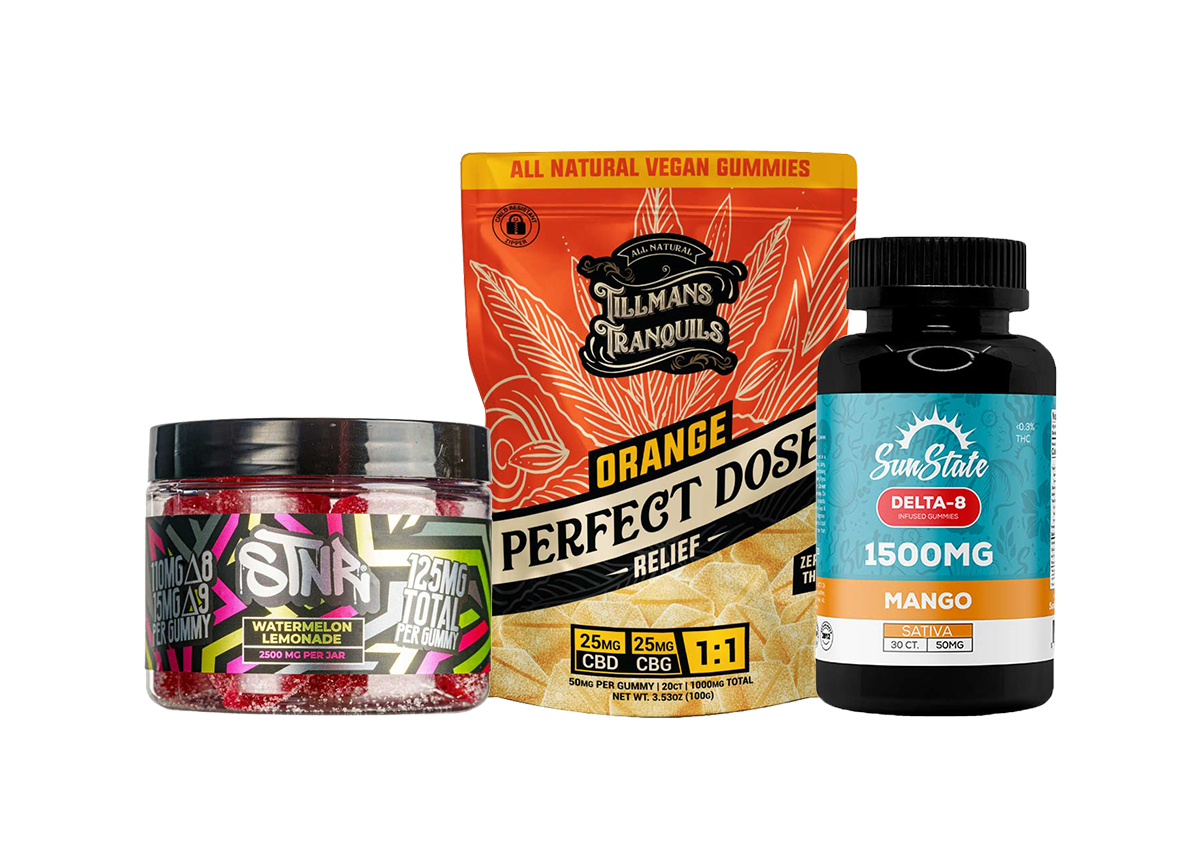
Most people's first experience with Delta-8 THC is a gummy. They work, but they're slow, sometimes 45 minutes to two hours before you feel anything, and if you take too much, you're sitting with that for a while. A Delta-8 tincture solves for all of that. It absorbs faster, the dose is easier to control, and the experience tends to feel smoother from start to finish. If you've tried Delta-8 gummies and wanted something you could manage more precisely, this is the format to know about.
Key Takeaways
-
Delta-8 THC tinctures absorb sublingually (under the tongue), which means faster onset than gummies, typically 10 to 45 minutes instead of up to two hours.
-
A 1,500mg tincture with 50mg per dropper gives you real flexibility to start low and increase your dose in small increments until you find your sweet spot.
-
Sativa and Indica tinctures serve different purposes: Sativa supports daytime focus and energy, while Indica is designed for evening relaxation and sleep.
-
Delta-8 THC is federally legal under the 2018 Farm Bill when derived from hemp and containing less than 0.3% Delta-9 THC.
What Is a Delta-8 THC Tincture and How Is It Different from a Gummy?
A Delta-8 THC tincture is a liquid extract, typically Delta-8 distillate suspended in a carrier oil like MCT oil, that you take by placing a dropper under your tongue. That's the key difference between a tincture and any other form of Delta-8. When you hold it under your tongue for 30 to 60 seconds, the cannabinoids absorb directly through the sublingual membrane into your bloodstream, skipping the digestive process entirely.
With a gummy, the Delta-8 has to travel through your digestive system and get processed by your liver before it reaches your bloodstream. That process takes time and can be unpredictable depending on what you've eaten, your metabolism, and how your body processes cannabinoids that day. A tincture bypasses all of that. The onset is faster, usually 10 to 45 minutes, and the experience tends to be more consistent because you're not waiting on digestion to do its thing.
The other major difference is dose control. With gummies, you're working in fixed increments. If a gummy is 25mg, your options are one, one and a half, or two. With a tincture, you can start with a quarter dropper, wait to assess, and add more from there. For people who are newer to Delta-8 or who are dialing in their ideal dose, that flexibility matters.
What Does Delta-8 THC Actually Feel Like?
Delta-8 THC is a naturally occurring cannabinoid in hemp, and it's chemically similar to Delta-9 THC, the compound in traditional cannabis, but with a few structural differences that change how it interacts with the endocannabinoid system. The result is psychoactive effects that most users describe as milder and more functional than Delta-9.
Common experiences include mild euphoria, physical relaxation, mood elevation, and reduced physical discomfort. What most people notice is that mental clarity tends to remain more intact than with Delta-9. You feel it, but you don't feel flattened by it. This makes Delta-8 THC a popular choice for people who want real relief without the anxiety or mental fog that higher-potency Delta-9 can sometimes bring.
Effects vary from person to person based on body weight, tolerance, metabolism, and the amount you take. Someone new to cannabinoids will feel 25mg differently than someone who uses Delta-9 THC regularly. Starting with a small dose, a quarter to half dropper, and waiting a full 45 minutes before deciding you need more is the right move every time.
What Is the Difference Between Sativa and Indica Delta-8 Tinctures?
This is one of the questions that comes up most often with tinctures because most people are used to thinking of Sativa and Indica as cannabis plant types. In the context of a hemp-derived tincture, the distinction is really about the terpene profile added to the formula, and the effect that profile is designed to produce.

Sativa Tincture (Lemon + Lime): What Is It Good For?
The Sativa tincture from My Pain Center is flavored with lemon and lime terpenes and is designed for daytime use. Sativa terpene profiles tend to produce a more uplifting, energizing effect, sharper focus, elevated mood, and a sense of mental clarity rather than sedation. This is the tincture you reach for in the morning or early afternoon when you want the relaxing and anti-discomfort benefits of Delta-8 without feeling like you need to lie down.
If you deal with daytime stress, low motivation, or general tension that gets in the way of your day, the Sativa tincture is worth trying as part of a morning routine. Some people use it similarly to how others use coffee, not to get high, but to take the edge off and get moving with more ease.
Indica Tincture (Blue Lavender): What Is It Good For?
The Indica tincture is infused with blueberry and lavender terpenes and is built for evening use. Indica profiles are associated with deeper physical relaxation, a sense of body heaviness, and a natural pull toward sleep. If your issue is racing thoughts at night, physical tension that won't let go, or just not being able to wind down after a long day, this is the one designed for that.
Many people use the Indica tincture specifically for sleep support. Delta-8 THC on its own has relaxing properties, and the lavender terpene profile adds calming effects, making it well-suited to bedtime routines. Take it 30 to 45 minutes before you want to be asleep and let it do its job.
How Strong Is a 1,500mg Delta-8 Tincture?
The 1,500mg tincture from My Pain Center contains 1,500mg of Delta-8 THC in a 30mL (1 oz) bottle, which works out to 50mg of Delta-8 per full dropper. That's a meaningful dose per serving, and it puts this tincture firmly in the high-potency category.
To put that in context: many starter tinctures come in at 500mg to 1,000mg total. At 1,500mg, you're getting 50mg per dropper, which is more than enough for experienced users and a solid single serving even for people who've built some tolerance. For someone newer to Delta-8, half a dropper (25mg) is a more appropriate starting point. Experienced users may find that a full dropper delivers exactly where they want to be.
The potency also means you're getting good value per milligram. A 1,500mg bottle gives you 30 full-dropper servings, which at $39.99 works out to about $1.33 per 50mg serving. That's competitive for a third-party tested, USA-grown hemp product with a clean ingredient list.
What Are the Ingredients in the Delta-8 Tincture?
The ingredient list is short, which is how it should be. The 1,500mg Delta-8 tincture from My Pain Center is made with three ingredients: organic coconut MCT oil, hemp-derived Delta-8 distillate, and flavor terpenes (lemon and lime for the Sativa, blueberry and lavender for the Indica).
MCT oil is one of the best carrier oils for cannabinoids because it's highly bioavailable, meaning your body absorbs it quickly and efficiently, and it's flavorless on its own, so it doesn't compete with the terpene profile. It's also easy on the digestive system for people with sensitive stomachs, which is a common concern with oil-based supplements.
There are no artificial additives, preservatives, or extra ingredients that don't need to be there. The product contains less than 0.3% Delta-9 THC, keeping it compliant with federal hemp standards. Every batch is third-party lab tested for purity, potency, and compliance, and the lab reports are available directly on the product page.
How Do You Use a Delta-8 THC Tincture Correctly?
The right technique makes a noticeable difference in how fast and how consistently you feel the effects.
Shake the bottle well before each use, as the Delta-8 distillate can settle in the carrier oil over time, and shaking gives you an even distribution of cannabinoids in every dropper. Fill the dropper to your desired amount, place it under your tongue, and hold it there for 30 to 60 seconds before swallowing. The longer you hold it, the more absorption happens through the sublingual membrane. Swallowing it immediately still works, but you'll wait longer for the effects because more of it is processed during digestion.
Start with a small dose if you're newer to Delta-8, a quarter to half dropper, and wait at least 45 minutes before deciding whether to take more. This patience is worth it. The most common mistake people make with any THC product is redosing too early because they don't feel anything yet, and then end up more affected than they intended.
Taking the tincture with food, or eating within 10 to 30 minutes after, can help with absorption and reduce any stomach sensitivity. Don't exceed the suggested daily dose, and don't drive or operate machinery after use.
Is a Delta-8 Tincture Better Than Delta-8 Gummies?
Neither is better; they're better for different things. The right answer depends on what you need.
Gummies win on convenience, discretion, and consistency. Each gummy is a pre-measured dose; there's nothing to measure or count, and the slow release from digestion can actually be an advantage for people who want effects that last longer and come on more gradually.
Tinctures win on speed, flexibility, and control. If you want to feel something in 15 to 30 minutes rather than 90, or if you want to fine-tune your dose to the milliliter, a tincture is the better tool. Tinctures are also a smart option for people who don't like the sugar content in gummies or who want to add their dose to a drink or tea rather than chewing.
Many experienced users keep both on hand and use them differently depending on the situation. Fast onset needed? Tincture. Something longer-lasting for a full day or full night? Gummy. If you're curious about Delta-8 gummies for comparison, My Pain Center carries those, too.
Can Delta-8 THC Tincture Help with Sleep or Pain?
Sleep is one of the most common reasons people reach for Delta-8 tinctures, particularly the Indica variety. Delta-8 THC interacts with CB1 receptors in the brain and central nervous system, which play a direct role in regulating sleep cycles, pain perception, and anxiety response. A review published in PubMed by researchers at the University of Sydney found that the endocannabinoid system plays a direct role in regulating the circadian sleep-wake cycle, and that cannabinoids show potential as therapeutic tools for sleep disorders, including insomnia.
The lavender terpene in the Indica tincture adds another layer. Lavender has documented anxiolytic and sleep-promoting properties that work alongside the Delta-8 to help you wind down. For people who struggle with racing thoughts at night or general physical restlessness that keeps them awake, combining Delta-8's CB1 activity with a calming terpene profile is a reasonable approach to natural sleep support.
For pain, Delta-8 tinctures are commonly used to relieve general physical discomfort, muscle tension, and joint aches. They work systemically rather than locally, meaning the relief is full-body rather than targeted to one spot. If your pain is localized and you want something you can apply directly, the Fast Feels Muscle & Joint Cream is a solid pairing with a tincture. The tincture handles systemic relief; the cream handles the specific spot. Many MPC customers use both together for that reason.
A comprehensive review of Delta-8 THC's comparative pharmacology, published in PubMed and covering decades of preclinical studies, documented its analgesic, anxiolytic, and antinociceptive properties through CB1 and CB2 receptor interactions. As with all cannabinoid research, human clinical trials are still catching up, but the underlying receptor biology is well established.

FAQ
What does a Delta-8 THC tincture feel like?
A Delta-8 THC tincture produces mild psychoactive effects, including relaxation, mood elevation, and reduced physical discomfort. Most users describe it as a smoother, more functional experience than Delta-9 THC; you feel it clearly, but mental clarity tends to stay intact. The specific feeling depends on the dose, the strain (Sativa vs. Indica), and individual tolerance. First-time users often report a gentle relaxation of the body and a lighter, more positive mood within 30 to 45 minutes of taking it sublingually.
How long does it take for a Delta-8 tincture to kick in?
A Delta-8 tincture taken sublingually typically kicks in within 10 to 45 minutes. Holding it under your tongue for 30 to 60 seconds before swallowing allows direct absorption into the bloodstream through the sublingual membrane, which is significantly faster than waiting for a gummy to digest. If you take it more like a shot and swallow it immediately, the onset will be slower, closer to the 45-minute end of the range, because more of it is absorbed during digestion.
How much Delta-8 tincture should I take?
Start with 25mg (half a dropper of the 1,500mg tincture) if you're newer to Delta-8 THC, and wait at least 45 minutes before assessing whether you need more. Experienced users often take a full dropper (50mg) and find that's their preferred dose. Because everyone's endocannabinoid system responds differently, there's no universal correct dose. The goal is to find the lowest amount that gives you the effect you're looking for and stay there consistently.
Can I take a Delta-8 tincture every day?
Yes, many people use Delta-8 tinctures as part of a daily wellness routine, particularly for ongoing stress, sleep support, or chronic discomfort. Daily use is generally well-tolerated. That said, tolerance can build over time with consistent THC use, which means you may need slightly higher doses to get the same effect after weeks of regular use. Taking occasional breaks, even just a day or two, can help reset tolerance if you find your usual dose isn't delivering the same results.
Will a Delta-8 tincture show up on a drug test?
Yes, it can. Delta-8 THC is metabolized into THC metabolites, which are the same compounds standard drug tests look for. A drug test cannot distinguish between Delta-8 and Delta-9 metabolites, so even a federally legal Delta-8 product can result in a positive screen. If you are subject to drug testing for work or other reasons, avoid Delta-8 THC products regardless of their legal status or hemp derivation.
Is Delta-8 THC tincture legal?
Federally, yes. The 1,500mg Delta-8 THC tincture from My Pain Center is derived from USA-grown hemp and contains less than 0.3% Delta-9 THC, placing it within the bounds of the 2018 Farm Bill. However, Delta-8 THC is regulated or banned in some states. States including Colorado, New York, and several others have moved to restrict Delta-8 products. Check your state's current laws before purchasing. The legal landscape for hemp-derived cannabinoids continues to shift.
What is the difference between the Sativa and Indica tinctures?
The Sativa tincture (Lemon + Lime) is formulated for daytime use. Its terpene profile is uplifting and energizing, designed to support focus, mood, and productivity without sedation. The Indica tincture (Blue Lavender) is formulated for evening use. It carries calming blueberry and lavender terpenes that work alongside Delta-8's relaxing effects to support wind-down and sleep. The Delta-8 distillate is the same in both; the difference is entirely in the terpene profile and the time of day each is suited for.
Ready to Try It?
If you want the speed and dose control that gummies can't give you, the Delta-8 THC Tincture (1,500mg) from My Pain Center is the place to start. Pick the Lemon Lime Sativa for daytime use or the Blue Lavender Indica for nighttime, both are made with organic MCT oil, hemp-derived Delta-8 distillate, and nothing extra. Third-party tested, 50mg per dropper, $39.99 a bottle. Start low, go slow, and find your dose.