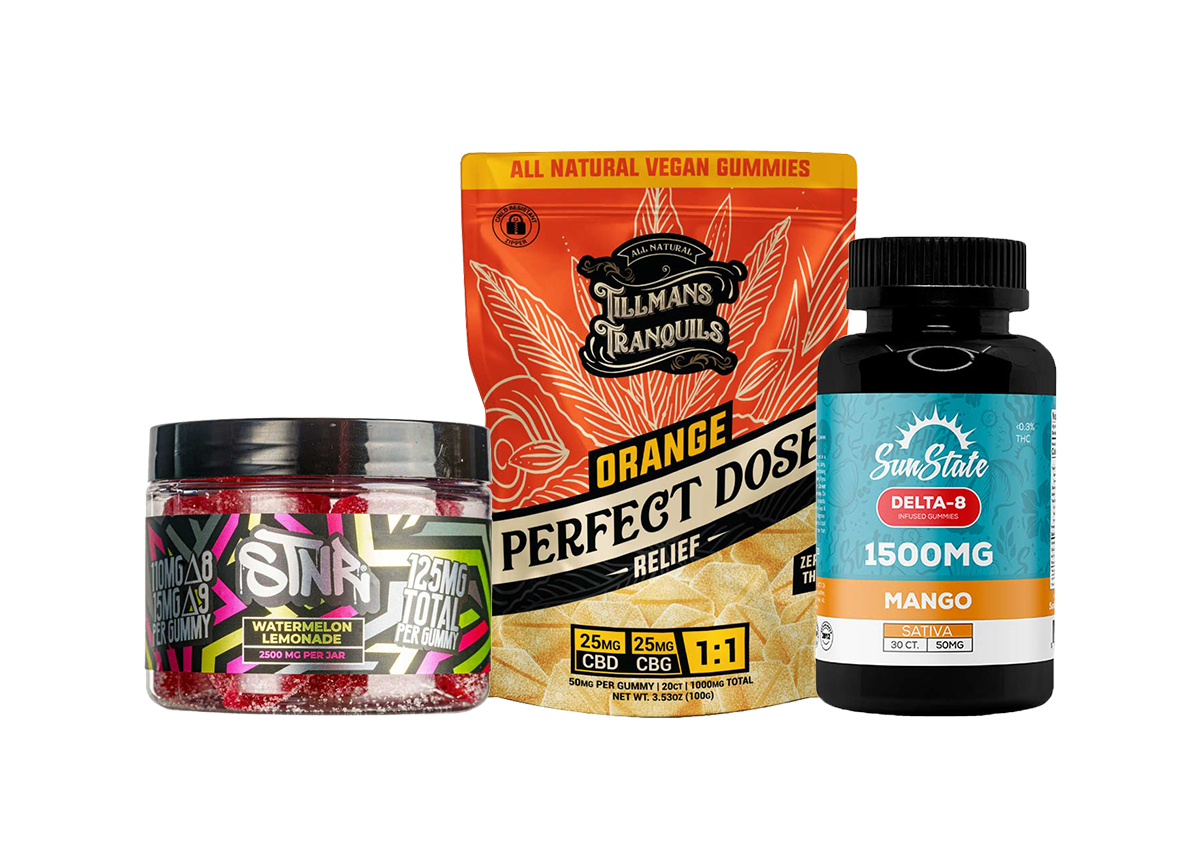
If you've been paying attention to hemp product labels lately, you've probably noticed CBG appearing alongside CBD and THC more and more. It's available in gummies, creams, tinctures, and vapes, often included in multi-cannabinoid formulas. But most people have no idea what it actually is or why it's there.
CBG isn't a marketing add-on. It's a cannabinoid with its own distinct way of interacting with your body, and the research behind it has been building steadily. Here's what you actually need to know.
Key Takeaways
- CBG (cannabigerol) earns its "mother of all cannabinoids" nickname because its acidic form, CBGA, is the biosynthetic precursor from which CBD, THC, and most other cannabinoids are made before the plant matures.
- CBG is non-psychoactive, meaning it will not get you high regardless of how much you take.
- Research has identified CBG's potential for reducing inflammation, managing pain, supporting mood, and protecting nerve tissue, through mechanisms that differ from CBD's.
- CBG works best in combination with other cannabinoids, which is why the most effective products pair it with CBD, THC, or both.
What Is CBG? Benefits, Uses, and How It Differs from CBD
CBG stands for cannabigerol. It's a naturally occurring cannabinoid found in the hemp plant, and it holds a unique position in cannabinoid biology: it's the chemical parent of almost every other cannabinoid you've heard of.
Early in the hemp plant's growth cycle, it produces an acidic compound called CBGA (cannabigerolic acid). As the plant matures, enzymes convert CBGA into the precursor acids for CBD, THC, CBC, and other cannabinoids. By the time a hemp plant reaches full maturity, most of the CBGA has already been converted, which is why CBG is typically present in only trace amounts in mature hemp, usually less than 1% by weight.
That scarcity is part of why CBG products have historically been more expensive than CBD products and why CBG remained under the radar for so long. Breeding and extraction technology have improved significantly in recent years, making it more accessible. But CBG is still not as abundant in hemp as CBD, which is worth knowing when you're evaluating the quality and potency of what you're buying.
How Does CBG Work in the Body?
CBG interacts with the endocannabinoid system (ECS), the regulatory network of receptors, enzymes, and signaling molecules that your body uses to manage pain, inflammation, mood, appetite, sleep, and immune response. What makes CBG interesting from a research standpoint is that it interacts with the ECS differently from CBD.
CBD primarily works by indirectly influencing CB1 and CB2 receptors and by inhibiting the enzyme that breaks down anandamide, one of your body's own endocannabinoids. CBG takes a more direct approach. It binds to both CB1 and CB2 receptors directly, and it also interacts with other receptor systems, including alpha-2 adrenoceptors (which play a role in pain and blood pressure regulation) and TRP channels (which are involved in pain sensation and inflammation).

This broader receptor profile is why researchers are interested in CBG for conditions that CBD alone may not fully address. A 2024 comprehensive review published in PubMed examined CBG's molecular mechanisms and described its potential to modulate inflammation, pain, and neurodegeneration through multiple signaling pathways, including CB1, CB2, TRP channels, and alpha-2 adrenoceptors.
CBG is also non-psychoactive. It does not activate CB1 receptors in the brain the way THC does, which means it produces no intoxicating effect.
What Is CBG Good For? The Main Benefits
Pain and Inflammation
This is where CBG's research base is strongest. Multiple studies have documented CBG's anti-inflammatory activity through mechanisms distinct from but complementary to those of CBD. A 2021 study by researchers at Hebrew University and the University of Oxford found that CBG and its derivatives exhibited significant anti-inflammatory and analgesic properties in preclinical models, noting CBG's particular effectiveness in reducing inflammatory markers.
CBG appears to reduce inflammation by suppressing key signaling pathways, including the NF-kB pathway, which is one of the primary drivers of chronic inflammatory response in the body. For people dealing with musculoskeletal pain, joint inflammation, or chronic discomfort, this is meaningful. CBG doesn't just mask pain signals. It works at the level of the inflammatory process generating those signals.
This is also why CBG shows up in the best topical pain formulas. When combined with CBD and THC in a cream or roll-on, CBG adds a third layer of anti-inflammatory activity that covers receptor pathways the other two cannabinoids don't fully reach on their own.
Stress and Mood Support
CBG's interactions with alpha-2 adrenoceptors and serotonin receptors confer properties that may support mood regulation and stress responses. Alpha-2 adrenoceptors are involved in the body's stress and anxiety circuitry, and CBG's activity at these receptors is one reason users consistently report a calm, grounded feeling from CBG-containing products, distinct from the sedating effect some people associate with high-dose CBD.
Unlike THC, which can amplify anxiety at higher doses in sensitive individuals, CBG does not appear to carry the same risk. Users who find Delta-9 or Delta-8 THC occasionally trigger anxious thoughts often report that CBG blends feel smoother and more manageable, which aligns with the receptor biology.
Neuroprotection
Some of the most interesting emerging research on CBG concerns its potential neuroprotective properties. Early preclinical studies have examined CBG's ability to support nerve cell health and reduce oxidative stress in neural tissue. While this research is still early-stage and not yet supported by large-scale human clinical trials, the mechanisms involved, particularly CBG's antioxidant activity and its interactions with TRP channels, are legitimate areas of scientific interest.
Antibacterial Properties
CBG has shown meaningful antibacterial activity in laboratory research, including against strains that are resistant to conventional antibiotics. This is an area of active pharmaceutical research and not the primary reason most people use CBG wellness products, but it's worth noting as one reason CBG's full therapeutic profile is considered broader than CBD's.
What Is the Difference Between CBG and CBD?
This is the question that comes up most often, and the honest answer is that they're complementary rather than interchangeable.
CBD is better researched at this point, with a larger clinical trial base and FDA approval for one specific application (Epidiolex for certain seizure disorders). It's widely understood to reduce anxiety, support sleep, and manage inflammation, primarily through indirect modulation of the ECS and activity in the anandamide pathway.
CBG operates through more direct receptor binding and a broader receptor profile. It reaches signaling pathways that CBD doesn't, which is why the two cannabinoids together tend to outperform either one alone. This is the entourage effect in practice: cannabinoids working synergistically to cover more of the body's receptor landscape than any single compound can.
For practical purposes:
If you want general calm, anxiety reduction, or sleep support, and you've had good results with CBD alone, CBD is likely doing its job.
If you're dealing with more significant pain, inflammation, or physical discomfort and CBD alone hasn't been enough, adding CBG to the mix is a logical next step. The two cannabinoids cover different ground.
If you want both, the best approach is a product that combines them, which is exactly what most of the high-performing formulas in the CBG wellness collection do.
Does CBG Get You High?
No. CBG is non-psychoactive. It does not bind to CB1 receptors in a way that produces intoxication, and it does not convert to THC in the body. You will not feel high from CBG, regardless of the dose.
This is true even in products that combine CBG with small amounts of THC, like a full-spectrum gummy or cream. The CBG itself contributes no psychoactive effect. Any mild euphoria or altered sensation in those products comes from the THC component, not the CBG.
CBG Products at My Pain Center
The CBG collection at My Pain Center covers every format, so whether you prefer gummies, topicals, or a vape, there's a CBG formula to suit you.
For pain and inflammation: The Fast Feels Muscle & Joint Cream (1,300mg THC+CBD+CBG) is the strongest topical option in the collection. All three cannabinoids work together directly at the site of application, with CBG adding anti-inflammatory activity that complements both CBD and THC in the formula. It's the right pick when the pain is localized and you want targeted, non-systemic relief.

For daily wellness: The CBD+CBG Relief Gummies (50mg) are the most-reviewed CBG product on the site, with 4.78 stars across 46 reviews, and the right starting point for anyone who wants to add CBG to a daily routine without any THC. Consistent daily use gives the cannabinoids time to build a cumulative effect through the ECS.

For pain and sleep with more potency: The Relief Gummies THC+CBD+CBG (105mg) bring all three cannabinoids together in a single gummy. At 105mg total, these are a meaningful step up in potency and the better pick for people managing chronic discomfort or who need support winding down at night.

How Do You Use CBG Products?
CBG follows the same general dosing principles as other cannabinoids: start low, go slow, and give it time.
For gummies, start with one gummy and wait two full hours before deciding whether you need more. CBG in edible form takes time to metabolize, and the most common mistake is redosing before the first dose has fully kicked in. For topicals, apply generously to the target area and massage in for 30 to 60 seconds. The physical pressure helps drive the formula through the skin layers, where cannabinoid receptors are located.
CBG tends to produce a subtler, more grounded effect than THC, which means some people feel like nothing is happening when it's actually working. The absence of sedation or euphoria isn't a sign it isn't working. Pay attention to how your body feels in the hours after you take it, particularly pain levels, mood, and ease of stress. Those are the signals CBG is most likely to shift.
Daily consistency matters more with CBG than with some other cannabinoids. Because it works through direct receptor binding and supports the ECS at a foundational level, regular use tends to build better results over time than occasional use.

FAQ
Is CBG better than CBD for pain?
Not necessarily better, but different. CBG engages receptor pathways that CBD doesn't, particularly through direct binding to CB1 and CB2 and through alpha-2 adrenoceptor activity. For pain management specifically, the combination of CBG and CBD tends to outperform either one alone because they cover complementary ground. If CBD alone hasn't been giving you the pain relief you need, adding CBG to the mix is a reasonable next step before moving to higher-potency THC options.
Will CBG show up on a drug test?
CBG itself is not what drug tests screen for. Standard drug tests detect THC metabolites. A pure CBG product with no THC should not produce a positive drug test. However, many CBG products, including several in the My Pain Center collection, contain CBD alongside trace or therapeutic amounts of THC. If a product contains any THC, there is a risk of a positive screen regardless of how much CBG is also in the formula. Always check the product's COA (certificate of analysis) to confirm THC content before purchasing if drug testing is a concern.
How long does CBG take to work?
For gummies and other ingestibles, CBG typically takes 45 minutes to 2 hours to reach full effect. For topicals, localized effects can be felt within 15 to 30 minutes. Like most cannabinoids, the effects of CBG are cumulative over time with regular use, meaning people who take it consistently for several weeks often report better results than those who use it only occasionally.
What does CBG feel like?
CBG produces a calm, grounded feeling rather than a high or sedated feeling. Most users describe reduced physical tension, a clearer mental state, and a gentle mood lift without any cognitive impairment. It does not produce euphoria the way THC does, and it does not cause the drowsiness that high doses of CBD sometimes produce in sensitive individuals. The effect is often described as subtle but real.
Can you take CBG every day?
Yes. CBG is well-tolerated with daily use and there is no evidence of significant side effects from regular CBG consumption. Many people use it as part of a daily wellness routine for ongoing pain management, stress support, or general anti-inflammatory benefit. As with any cannabinoid supplement, starting with a conservative dose and adjusting gradually is the right approach.
What is the best CBG product for beginners?
The CBD+CBG Relief Gummies (50mg) are the best starting point for most people. They contain no THC, are the most-reviewed CBG product in the collection, and the combined CBD and CBG formula gives you a gentle introduction to what CBG can do without any risk of psychoactive effects. Start with one gummy per day and assess after a week before adjusting.
Does CBG work better with CBD or THC?
Both combinations work better than CBG alone, for different reasons. CBG and CBD together cover a broad anti-inflammatory and mood-regulating spectrum with no psychoactive effect, which makes that combination good for daytime use and for people who want to avoid THC entirely. CBG, CBD, and THC together produce the fullest entourage effect and tend to deliver the most significant results for pain and sleep, though that combination will carry some psychoactive effect depending on the THC dose.
Ready to Add CBG to Your Routine?
CBG is one of the most interesting cannabinoids in the hemp plant, and the research behind it is only getting stronger. Whether you're looking for targeted pain relief, daily stress support, or a more comprehensive cannabinoid formula than CBD alone can offer, the CBG Wellness Collection at My Pain Center has a format that fits your needs. All products are third-party tested, made from USA-grown hemp, and federally compliant.