Key Takeaways
- Standard drug tests screen for a THC metabolite, not CBD itself, which means pure CBD isolate products are very unlikely to trigger a positive result.
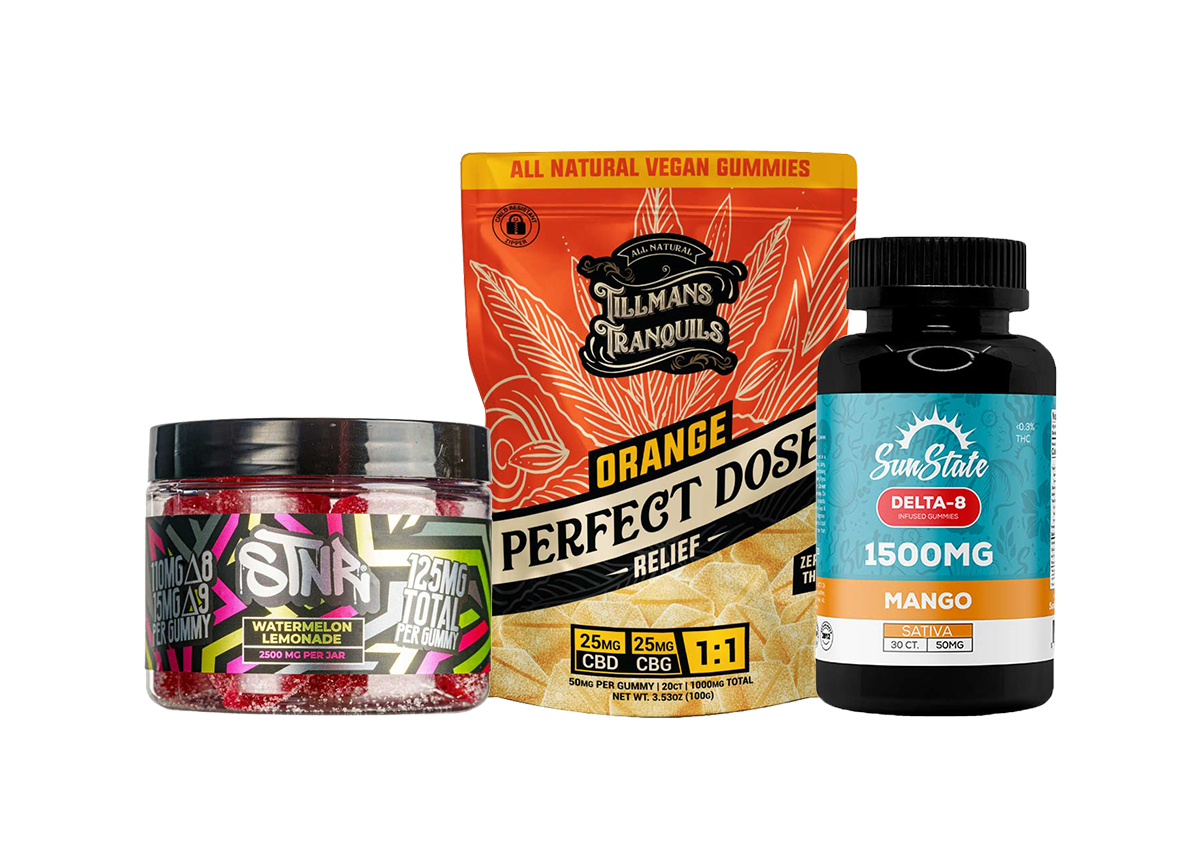
- Full-spectrum CBD, Delta 8, Delta 9, and THCA products all contain enough THC to potentially cause a positive drug test, even though they are federally legal.
- Hemp-derived products with less than 0.3 percent Delta-9 THC have been allowed on domestic flights since 2019, and that has not changed with the recent TSA medical marijuana update, which applies to a different category of product entirely.
- State laws and international rules vary widely, so what is legal to fly with domestically isn't automatically legal to bring across a state line or a country's border.
If you have ever hesitated before buying a hemp product because you were not sure whether it would cost you a job or cause a problem at the airport, you are not alone. These are two of the most common questions people have, and the honest answer to both depends heavily on which specific product you are talking about.
Do Standard Drug Tests Detect CBD, or Only THC?
Standard workplace and legal drug tests are not designed to detect CBD. They screen for THC metabolites, most commonly 11-nor-9-carboxy-THC, a byproduct your body produces after processing Delta-9 THC. A positive result documents that this metabolite is present, not that you are currently impaired, according to a review of workplace cannabinoid testing published in the Journal of Medical Toxicology. Pure CBD, whether from an isolate gummy or an isolate oil, doesn't metabolize into that compound, so CBD itself isn't what a standard test looks for.
That distinction matters because it means the real question is almost never "does CBD show up on a drug test?" It is "does this specific product contain enough THC to show up on a drug test," and the answer changes completely depending on which formulation you are using.
Will Full-Spectrum CBD Make You Fail a Drug Test?
It can, and this is the most common way people test positive without realizing why. Full-spectrum CBD products legally contain up to 0.3 percent Delta-9 THC by dry weight. That amount will not get you high, but with frequent or high-dose use, it can accumulate in your system enough to trigger a positive result, particularly on a sensitive test. Broad-spectrum CBD is formulated to remove THC entirely while keeping other cannabinoids, and CBD isolate contains no other cannabinoids at all, making both meaningfully lower risk than full-spectrum if a drug test is a real concern for you. If you need to be as cautious as possible, an isolate or broad-spectrum product with a certificate of analysis confirming non-detectable THC is the safer starting point.
Will Delta 8, Delta 9, or THCA Products Show Up on a Drug Test?

Yes. Standard drug tests do not distinguish between hemp-derived and marijuana-derived THC, and they do not care whether the source was federally legal. Delta 8, Delta 9, and THCA all convert to or share structural similarity with the same THC metabolite that standard tests are built to detect. Federal legality under the 2018 Farm Bill doesn't affect whether a workplace or legal drug test flags these products. If you are subject to any kind of drug testing, whether for employment, a custody arrangement, or a professional license, these product categories carry real risk regardless of how they are marketed or labeled.
How Long Does THC Stay in Your System?
This varies more than most people expect, and dose plays a bigger role than format. A study measuring THC metabolite excretion after oral cannabis administration found that after single doses of 10, 25, or 50 milligrams of THC, urine metabolite concentrations peaked between 6 and 9 hours later and remained measurable for multiple days afterward, according to research published on oral cannabis pharmacokinetics. Detection windows extend considerably further with regular use, since THC metabolites are fat-soluble and accumulate in the body over time, which is why an occasional user and a daily user can test very differently even after the same dose. Federal workplace testing programs generally use a 50 nanogram per milliliter cutoff for an initial screen, so a single low-dose edible is a very different risk profile than daily higher-dose use.
How Can You Lower Your Risk Before a Scheduled Drug Test?
If you know a drug test is coming, the most reliable step is stopping use of anything containing THC well in advance, ideally weeks rather than days, since detection windows for regular users can extend well beyond a week. Switching to a THC-free, isolate-based CBD product is the safer choice if you want cannabinoid support without that risk. There is no verified shortcut, detox product, or trick that reliably clears THC metabolites faster than time, so treat any product making that claim with skepticism.
Do Different Types of Drug Tests Matter?
Yes, and the test format changes both the detection window and what gets measured. Urine tests are the most common and generally have the longest detection window, since THC metabolites accumulate in fat tissue and get released gradually over time. Blood tests have a much shorter window, typically detecting recent use within hours to a couple of days, since they measure active THC rather than the longer-lived metabolite. Saliva tests fall somewhere in between and are increasingly used for roadside or same-day testing since they primarily detect very recent use. Hair follicle tests have the longest window of all, technically capable of detecting use going back roughly 90 days, though they are far less common outside of specific pre-employment or legal contexts. If you know which type of test you are facing, it is worth understanding that the "clean" timeline looks different for each one.
Do Vape Products Have Different Travel Rules Than Gummies or Oils?
Yes, and this trips people up more than the THC content question does. Vape pens and batteries cannot go in checked luggage under FAA hazardous materials rules, regardless of what cannabinoid they contain, since lithium batteries in the cargo hold present a fire risk. That means any THCA or Delta 8 disposable vape must travel in your carry-on, with the battery terminals protected if they aren't already inside the device. This rule applies to essentially all vape devices, not just cannabinoid ones, so it is worth keeping separate from the THC percentage question entirely. Gummies, capsules, and topicals have no such restriction and can go in either carry-on or checked bags without issue.
Can You Fly With Hemp Products in the U.S.?

Yes, and this hasn't changed in years. TSA has allowed hemp-derived products containing less than 0.3 percent Delta-9 THC in both carry-on and checked bags since 2019, when the agency updated its policy following the 2018 Farm Bill. This includes CBD gummies, Delta-8 and Delta-9 gummies, THCA products, and oils, as long as they meet that THC threshold. If your product is a liquid, like a tincture or drink drop, it needs to follow the standard 3.4-ounce carry-on liquid rule, though checked bags have no such limit. Gummies, capsules, and other solids are not subject to the liquids rule at all. Keeping products in their original packaging, with a certificate of analysis available if questions come up, is a reasonable precaution even though TSA officers are not equipped to test THC content on the spot.
Does the New TSA Medical Marijuana Update Apply to Hemp Products?
No, and this is a common point of confusion worth clearing up directly. In April 2026, TSA updated its "What Can I Bring?" page to list medical marijuana as permitted with "special instructions," following a federal order moving certain cannabis products to Schedule III. That change applies specifically to FDA-approved cannabis pharmaceuticals and marijuana regulated under a qualifying state medical program, not to hemp-derived products. If you saw headlines suggesting TSA now broadly allows marijuana, that reporting was largely overstated. Hemp-derived CBD, Delta 8, Delta 9, and THCA products were already flyable before this update under the separate 2018 Farm Bill rule, and that rule is what still governs them, unchanged by the April announcement.
Separately, the federal hemp restrictions working through Congress this year could affect what remains legal to buy and travel with after the new effective date. For the latest on where that stands, our federal hemp ban update covers the current timeline in detail.
What About Crossing State Lines or Traveling Internationally?
This is where things get more complicated, and federal legality does not guarantee state-level legality. A small number of states restrict or ban hemp-derived Delta 8, Delta 9, or THCA products outright, regardless of their federal status, so a product that is perfectly legal to buy and use at home could be a problem to possess in another state. International travel is stricter still. Customs and Border Protection treats THC products as controlled substances at the border regardless of state or even federal hemp law, and many countries do not recognize any distinction between hemp-derived and marijuana-derived THC at all. If you are traveling internationally, the safest approach is leaving THC-containing products at home entirely and, if needed, purchasing CBD isolate locally at your destination once you have confirmed it is legal there.
Frequently Asked Questions
Does CBD show up on a drug test?
Pure CBD isolate generally does not, since standard tests screen for a THC metabolite that CBD does not produce. Full-spectrum CBD carries some risk due to its legal trace of THC.
Will Delta 8 gummies make me fail a drug test?
Yes. Delta 8 shares enough structural similarity with Delta-9 THC that standard drug tests can detect it, regardless of its federal legal status.
Can I fly domestically with THC gummies?
Yes, as long as they are hemp-derived and contain less than 0.3 percent Delta-9 THC. This has been TSA's policy since 2019 and is unrelated to the 2026 medical marijuana update.
Does the new TSA rule mean I can fly with regular marijuana now?
No. The April 2026 update applies only to FDA-approved cannabis pharmaceuticals and state-licensed medical marijuana, not to hemp-derived products or recreational cannabis.
How long does THC stay in your system after one edible?
Detectable metabolite levels can persist for several days after a single dose and considerably longer with regular use, since THC accumulates in fat tissue over time.
Is it legal to bring hemp products across state lines?
Federal legality under the Farm Bill does not guarantee state legality. A handful of states restrict hemp-derived THC products regardless of federal status, so it is worth checking your destination's laws before you travel.
Do urine, blood, and hair drug tests detect THC for the same amount of time?
No. Urine tests generally have the longest common detection window, blood tests detect only recent use within a day or two, and hair follicle tests can detect use going back roughly 90 days.
Can I pack a THCA vape in my checked bag?
No. Vape devices and batteries must travel in carry-on luggage under FAA rules, regardless of what cannabinoid the device contains. This applies to all vapes, not just cannabinoid ones.
What is the safest CBD product if I have an upcoming drug test?
A THC-free, isolate-based CBD product with a certificate of analysis confirming non-detectable THC is the lowest-risk option if a drug test is a genuine concern.