Key Takeaways
- People searching for CBD oil often want a systemic, whole-body dose rather than the oil format specifically, and gummies deliver that same effect with a fixed, repeatable amount in every piece.
- In a 2022 study of 428 arthritis patients, CBD use was associated with an 83 percent improvement in pain and a 44 percent average reduction in pain scores.
- Research on CBD absorption shows that most of what gets held under the tongue as a sublingual dose is swallowed anyway and absorbed through the digestive tract, which means the gap between oil drops and gummies is smaller than it is often made out to be.
- Gummies work best for general, whole-body joint stiffness, while topicals still make sense for one specific sore spot, so the two formats are complementary rather than competing.
If you searched for CBD oil for joint pain, there is a good chance what you actually want is a way to take CBD consistently, without guessing at drops or dealing with an oily aftertaste. That is worth stating plainly because it changes which product actually solves the problem. A pre-measured gummy delivers the same systemic effect as an oil drop, with a fixed dose every time and none of the dropper math.
What Causes Joint Pain, and Where Does CBD Fit In?
Joint pain usually comes from one of three sources: inflammation, as with arthritis or an old injury flaring up; mechanical wear, as cartilage thins with age or overuse; or general stiffness from sitting still too long. CBD does not repair cartilage or reverse arthritis, but it interacts with the body's endocannabinoid system, a network of receptors that helps regulate pain signaling and immune response. CBD binds more readily to CB2 receptors, which are concentrated in immune tissue, and activating them may calm some of the inflammatory signaling that makes joints feel swollen and stiff. That is the mechanism behind most of the joint-focused CBD research published so far, and it applies whether the CBD comes from an oil dropper, a gummy, or a capsule, since all three routes eventually put the compound into your bloodstream through digestion.
Why Gummies Instead of CBD Oil Drops?
Oil drops have one real advantage on paper: they are marketed as sublingual, meaning held under the tongue for faster absorption that bypasses digestion. In practice, that advantage is smaller than the marketing suggests. Research reviewing CBD delivery methods found that sublingual CBD absorbs slowly and inconsistently, and that the limited permeability of the mucous membrane means most transmucosal CBD products end up delivering the compound the same way oral products do, through the digestive tract rather than directly into the bloodstream, according to a review published in Pharmaceutics. In other words, holding oil under your tongue for thirty seconds before swallowing does not reliably produce a different result than swallowing a gummy in the first place.
That matters because gummies solve the two biggest complaints people have about oil drops. Dosing an oil tincture means counting drops or reading a dropper line, which is easy to get wrong, especially in a jar that is nearly empty or nearly full. Gummies remove that guesswork entirely, since every piece contains the same amount every time. They also travel and store better, with no risk of a leaking dropper bottle in a bag or a car cupholder, and no lingering hemp taste that lasts long after the dose is gone.
What Does the Research Actually Say About CBD and Joint Pain?

The most directly relevant study surveyed 428 people with arthritis about their experience using CBD. Respondents reported improvements in pain in 83 percent of cases, improvements in physical function in 66 percent of cases, and improvements in sleep quality in 66 percent of cases. The overall group reported a 44 percent average reduction in pain after starting CBD, with people who had osteoarthritis specifically seeing a larger reduction than those with rheumatoid or other autoimmune forms of arthritis, according to the study published in the Journal of Cannabis Research. More than 60 percent of respondents also reported reducing or stopping other pain medications after they started using CBD regularly.
It is worth being precise about what this study does and does not show. It surveyed self-reported outcomes rather than running a placebo-controlled trial, so it cannot prove CBD directly caused the improvements. What it does show is a large, real-world pattern across hundreds of people already living with joint pain, which is a reasonable starting point for anyone deciding whether to try it themselves.
How Should You Choose Between THC-Free, Broad-Spectrum, and Full-Spectrum CBD Gummies?
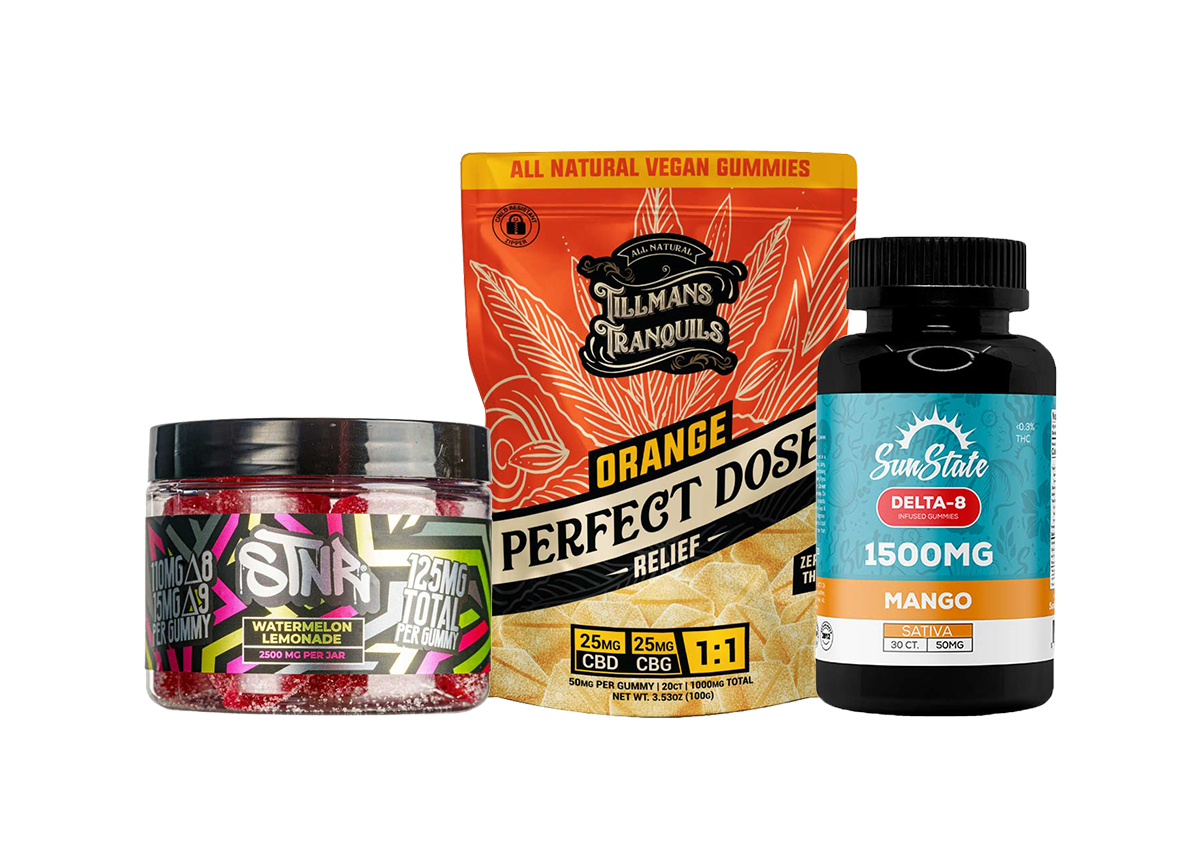
Not every CBD gummy is built the same way, and the differences matter more for joint pain than they do for something like sleep. A THC-free CBD gummy contains only isolated CBD with zero THC, which is the simplest starting point if you are new to cannabinoids, sensitive to THC, or subject to workplace drug testing. A CBD and CBG combination gummy pairs CBD with CBG in an even ratio and stays completely THC-free, and CBG is being studied separately for its own anti-inflammatory properties, so the two working together may offer more targeted support for joint-specific inflammation than CBD alone. A full-spectrum CBD gummy contains a broader range of naturally occurring hemp compounds alongside CBD, including a legal trace of THC under 0.3 percent, which some users find produces a stronger effect due to what researchers call the entourage effect, where cannabinoids work better together than any one of them does alone.
If you are new to CBD, start with the THC-free option to see how your body responds before moving to a full-spectrum product. If joint inflammation is the main complaint rather than general achiness, the CBD and CBG combination is worth trying next, since CBG's mechanism is distinct enough from CBD's to potentially add something rather than duplicate it.

How Do CBD Gummies Compare to CBD Topicals for Joint Pain?

Gummies and topicals solve different problems, and the honest answer is that many people benefit from using both. A gummy works systemically, meaning the CBD circulates through your bloodstream and can support overall inflammation levels throughout the body, which is useful if more than one joint bothers you or if the discomfort moves around. A topical like the Fast Feels Icy Relief Roll-On stays localized at the site of application and never enters the bloodstream in meaningful amounts, which makes it a better fit for one specific joint, like a single stiff knee or an aching thumb. If you are managing pain in one clearly defined spot, a topical will likely feel faster and more direct. If your joint pain is more diffuse or affects several areas, a gummy is the more practical daily approach, and combining the two is common practice for people managing more than one type of discomfort.

How Should Beginners Dose CBD Gummies for Joint Pain?
Start with a single low-dose gummy, in the 10 to 25mg range, and take it at the same time each day for at least a week before judging whether it is working. CBD builds up gradually with consistent use rather than producing an immediate, single-dose effect the way a painkiller does, so evaluating it after one or two gummies tends to give a misleading picture. If a week of consistent daily use produces no noticeable change, move up to a higher-potency gummy like the 50mg full-spectrum option before concluding CBD is not a fit. Anyone on blood thinners, immunosuppressants, or other prescription medications should talk to a doctor before starting, since CBD can interact with how the liver processes certain drugs.
Timing matters more than most people expect. CBD absorbs better when taken with food, particularly food that contains some fat, since the compound is fat-soluble and a completely empty stomach can blunt how much of the dose actually gets absorbed. Taking a gummy alongside a meal, rather than first thing in the morning on an empty stomach, is a small adjustment that can noticeably change how consistent the effect feels day to day. It is also worth tracking your dose and response somewhere simple, even just a note on your phone logging the date, the amount, and how your joints felt that evening, since joint pain naturally fluctuates with weather, activity level, and sleep, and a quick log makes it easier to tell whether CBD is actually contributing to a good day or whether the good day would have happened anyway.
How Do You Know a CBD Gummy Is Actually Potent Enough?
Not all CBD gummies on the market contain what the label claims. Third-party lab testing is the only way to confirm actual cannabinoid content, since the hemp supplement industry is not held to the same manufacturing oversight as pharmaceuticals, and CBD is a compound where underdosing is a common problem, not just an inconvenience. Look for a current certificate of analysis (COA) from an independent lab, not the manufacturer's own in-house testing, and check that the tested milligram count actually matches what is printed on the label. A gummy that tests at 15mg when the label says 50mg will not deliver the results the research describes, no matter how consistently you take it. Every CBD gummy sold through My Pain Center ships with a batch-specific COA available on request, which is worth checking against the label the first time you try a new product.
Are CBD Gummies Safe for Long-Term Joint Pain Management?
CBD is generally well tolerated in long-term use, with the most commonly reported side effects being mild fatigue, dry mouth, or changes in appetite. It is not regulated by the FDA as a treatment for any specific condition, so it should be treated as a complementary approach rather than a replacement for a documented treatment plan from a doctor, particularly for autoimmune forms of arthritis where disease progression needs to be monitored separately from symptom relief. If you are already taking daily medication for a joint condition, loop your doctor in before adding a daily CBD gummy so they can flag any interaction risk specific to what you are taking.
If oil drops were the only reason you had not already tried CBD for your joints, that barrier is smaller than it looks. Start with the CBD + CBG Relief Gummies if inflammation is the main issue, or the THC-free CBD Gummy Bears if you want the simplest possible starting point, and give it a full week before deciding whether it is doing anything.

Frequently Asked Questions
Can CBD gummies help with joint pain?
Many people report meaningful improvement. In a survey of 428 arthritis patients, 83 percent reported improved pain, and the group saw a 44 percent average reduction in pain scores after starting CBD.
Is CBD oil better than CBD gummies for joint pain?
Not meaningfully. Research on CBD absorption shows that most sublingual oil ends up swallowed and absorbed through digestion anyway, which is the same pathway gummies use, so the practical difference between the two formats is smaller than marketing suggests.
How long does it take for CBD gummies to help joint pain?
Give it at least a week of consistent daily use before judging results, since CBD tends to build up gradually rather than working like a single-dose painkiller.
Should I use CBD gummies or a CBD topical for joint pain?
Gummies work systemically and suit general or multi-joint discomfort, while topicals stay localized and suit one specific sore spot. Many people use both together.
Will CBD gummies show up on a drug test?
THC-free CBD gummies are formulated with zero THC and are the safer choice if drug testing is a concern. Full-spectrum gummies contain a legal trace of THC under 0.3 percent, which is unlikely but not guaranteed to be undetectable in every test.
What is the difference between CBD and CBD with CBG for joint pain?
CBG works through a mechanism distinct from CBD's, so combining the two may address joint inflammation more specifically than CBD alone, though both are still being studied.
Can I take CBD gummies with my arthritis medication?
Talk to your doctor first, especially if you take blood thinners or immunosuppressants, since CBD can affect how the liver processes certain medications.
How do I know a CBD gummy actually contains what the label says?
Check for a current, independent certificate of analysis (COA) from a third-party lab rather than the manufacturer's own testing, and confirm the tested milligram count matches the label before you buy.