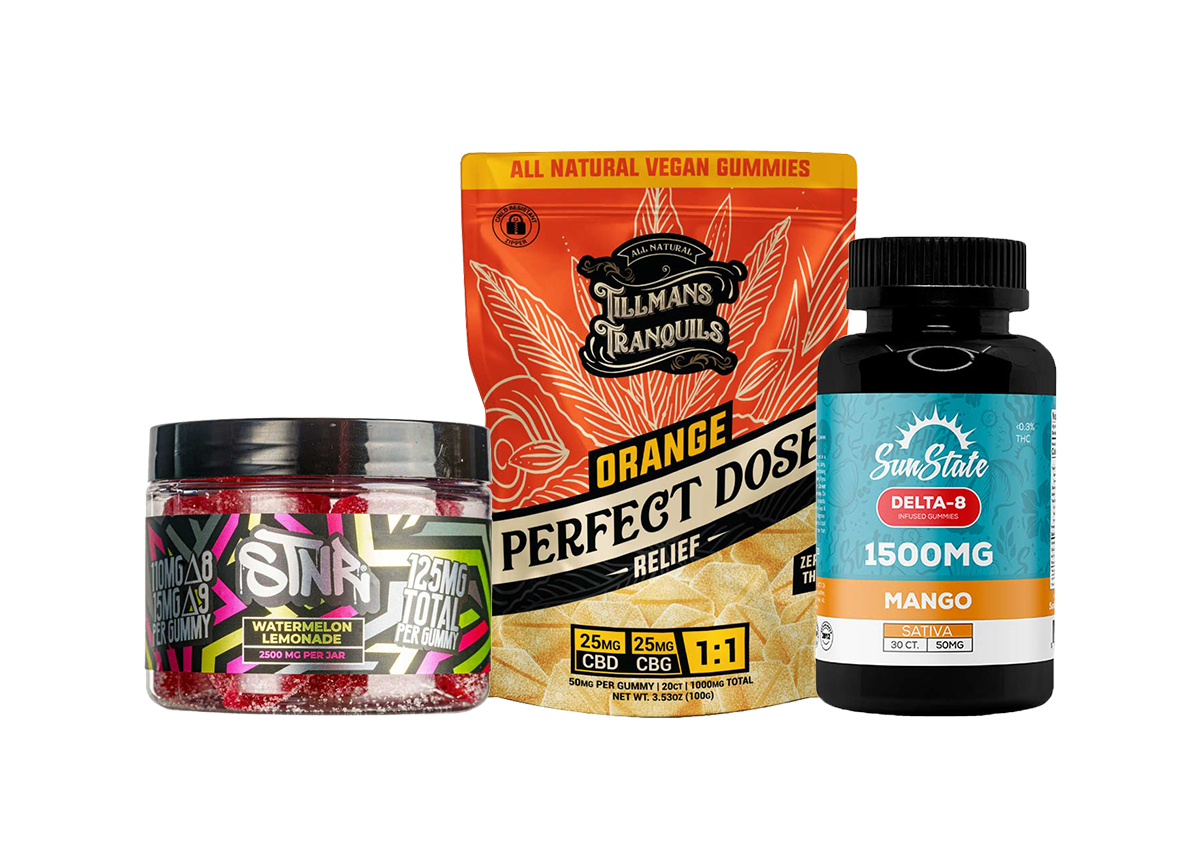
What the new federal hemp laws mean for Delta-8, Delta-9, CBD, and your favorite THC products.
If you've heard that Delta-8 THC is being banned, you're probably wondering what that means for the products you regularly purchase.
You may have also seen two different deadlines: November 12 and December 11, 2026.
So, which date is correct?
The answer is that both dates matter, but they affect different parts of the new federal hemp law.
Congress recently postponed most of the upcoming restrictions until December 11. However, certain cannabinoid restrictions are still scheduled to take effect November 12.
That distinction has created uncertainty about when commercially produced Delta-8 THC may become unavailable.
Here's what you need to know, what's happening in Washington, and what these changes could mean for your favorite products.

Why Are Hemp THC Laws Changing?
In November 2025, Congress passed legislation changing the federal definition of hemp.
Under the 2018 Farm Bill, hemp products generally qualified as federally legal hemp if they contained no more than 0.3% Delta-9 THC by dry weight.
That definition allowed a wide range of hemp-derived products to enter the market, including Delta-8 gummies, Delta-9 gummies, THC beverages, and other cannabinoid products.
The new legislation introduces stricter requirements, including:
- Restrictions on certain cannabinoids manufactured or synthesized outside the cannabis plant.
- A new limit of 0.4 milligrams of total THC and certain similar cannabinoids per finished product container.
- A broader definition of THC that considers more than Delta-9 alone.
These changes could affect many products currently sold by hemp retailers.
However, not all of the restrictions take effect on the same date. [1]
November 12, 2026: What Happens to Delta-8?
November 12 is the first important federal deadline.
On this date, products containing cannabinoids that cannot naturally be produced by the cannabis plant are scheduled to lose their federally protected hemp status.
Does This Include Delta-8 THC?
Possibly, but there is an important legal distinction.
Delta-8 THC occurs naturally in cannabis, although typically in very small amounts.
Because the plant produces so little Delta-8, most commercially available Delta-8 is made by converting hemp-derived CBD into Delta-8 through a chemical process.
The new federal law distinguishes between two categories:
1. Cannabinoids that cannot naturally be produced by cannabis
Products containing these cannabinoids are scheduled to lose their hemp status on November 12.
2. Cannabinoids that can naturally be produced by cannabis but are manufactured outside the plant
Restrictions on this category are scheduled to take effect December 11.
Here's where the confusion comes in.
Delta-8 naturally exists in cannabis, but most commercial Delta-8 is manufactured through CBD conversion.
Some legal experts believe this means converted Delta-8 falls under the December 11 deadline.
Others believe the manufacturing process could bring certain Delta-8 products under the November 12 restrictions.
The FDA was required to publish lists identifying different cannabinoid categories, but those lists have not been released.
Without that clarification, there is disagreement about which date applies to commercially produced Delta-8.
Bottom line: Delta-8 products could be affected as early as November 12, but December 11 may be the applicable deadline for converted Delta-8. The question remains unresolved. [1][2]
What Does This Mean for Delta-8 Customers?
If you regularly purchase Delta-8 gummies, oils, or other products, November 12 is the earlier potential deadline to watch.
Some retailers may stop offering these products before the legal situation is fully resolved.
At My Pain Center, we're closely monitoring developments and will update customers as additional guidance becomes available. However, for now, we are moving in accordance with November 12 and clearing out Delta 8 products. If you rely on any of our Delta 8 products, we suggest stocking up now.
December 11, 2026: Broader Hemp THC Restrictions
December 11 is the second major deadline.
This is when most of the remaining changes to the federal definition of hemp are scheduled to take effect.
One of the biggest changes is a new limit of 0.4 milligrams of total THC and certain THC-like cannabinoids per finished product container.
To put that into perspective, a single gummy containing10 mg of Delta-9 THC exceeds that limit by 25 times.
And the limit applies to the entire container, not each individual gummy.
Which Products Could Be Affected?
Depending on their ingredients and cannabinoid content, affected products could include:
- Delta-9 THC gummies
- Delta-8 THC gummies
- THC-infused beverages
- THC capsules and softgels
- Certain full-spectrum CBD products
- Other hemp-derived intoxicating cannabinoid products
Not all hemp products will necessarily disappear.
Products that meet the new federal requirements may remain available, subject to other applicable laws and regulations.
However, many of the THC products currently available through hemp retailers would no longer qualify as federally legal hemp if the restrictions take effect as written. [1]

Why Was the Hemp Ban Delayed Until December 11?
Originally, the broader federal hemp restrictions were scheduled to take effect November 12, 2026.
In September 2026, Congress passed legislation postponing most of those restrictions until December 11.
The extension was included in a temporary federal government funding measure.
The additional time was intended to allow lawmakers to consider longer-term solutions for the hemp industry.
However, the extension did not apply to every provision.
Restrictions involving cannabinoids that cannot naturally be produced by cannabis retained their November 12 effective date.
That's why customers are now seeing two different deadlines. [1][3]
What's Being Done to Change the December 11 Hemp Ban?
The December 11 deadline is not necessarily the end of the story.
Lawmakers, hemp businesses, industry associations, and other stakeholders are working on potential alternatives to the current restrictions.
There are several efforts underway.
1. Legislation to Delay the Restrictions
Several bills have been introduced in Congress that would extend the implementation deadline.
Some proposals would provide an additional two years, giving businesses and regulators more time to develop a workable framework.
Other proposals would repeal the hemp-definition changes entirely.
Important: These proposals have not become law. Unless Congress takes further action, the December 11 deadline remains in place. [1]
2. Proposals to Regulate Hemp THC Instead of Broadly Restricting It
Some lawmakers and industry organizations are advocating for a regulatory framework that would allow certain hemp-derived THC products to remain available under stricter rules.
Proposals discussed by industry representatives include:
- Requiring customers to be at least 21 years old.
- Establishing limits on THC content per serving and package.
- Requiring independent laboratory testing.
- Strengthening labeling and packaging requirements.
- Restricting marketing that appeals to children.
- Increasing oversight of manufacturers and retailers.
Supporters argue that a regulated marketplace could protect consumers while allowing responsible businesses to continue operating.
Others support the stricter federal definition because of concerns about intoxicating products, inconsistent testing, and access by minors.
Congress has not yet agreed on a replacement framework. [1][4]
3. Industry Organizations Are Advocating for Changes
Hemp businesses and industry organizations are communicating with lawmakers about the potential economic impact.
An industry analysis cited by the Associated Press estimated that the restrictions could put approximately $28.3 billion in annual retail revenue and 225,000 jobs at risk.
These are industry estimates, not confirmed future losses.
Businesses are asking lawmakers to consider alternatives that preserve access to compliant products while establishing clearer consumer protections. [4]
4. Another Extension Is Possible
Congress could include additional hemp-related provisions in future legislation, including another government funding agreement.
The current temporary federal funding measure also expires December 11.
That creates another opportunity for lawmakers to consider the hemp restrictions.
However, there is no guarantee Congress will approve another extension.
For now, December 11 remains the scheduled effective date for the broader federal restrictions. [1][2]
What Should Customers Do Now?
We understand that many customers have favorite products they purchase regularly.
While the legal situation continues to develop, here are a few things to keep in mind.
If you purchase Delta 8: November 12 is the earlier potential deadline. Availability may change before the broader December restrictions take effect.
If you purchase Delta 9 or other hemp-derived THC products: December 11 is the currently scheduled deadline for broader restrictions.
If you purchase CBD: Not every CBD product will necessarily be affected. The impact depends on its cannabinoid content and formulation.
Stay informed: Additional legislation or federal guidance could change the situation.
Plan: If you have favorite products, consider their availability, expiration dates, and your needs while purchasing remains lawful.
We'll continue sharing important updates as more information becomes available.
Frequently Asked Questions About the 2026 Hemp Ban
1. Is Delta-8 being banned on November 12, 2026?
Delta-8 could be affected as early as November 12, but the exact date remains disputed.
The uncertainty centers on how federal law treats Delta-8 manufactured by converting CBD.
Some legal interpretations point to November 12, while others point to December 11.
Until additional guidance is issued, customers should be aware of both dates.
2. Why is there confusion about Delta-8?
Because Delta-8 exists naturally in cannabis but is usually produced commercially through chemical conversion.
The new law treats cannabinoids that cannot naturally occur differently from cannabinoids that naturally occur but are manufactured outside the plant.
The FDA has not published the cannabinoid classification lists required by the legislation.
That has left businesses and legal experts interpreting how the different provisions apply to converted Delta-8. [1][2]
3. Will Delta-8 be banned completely?
Most commercially available Delta-8 products are expected to be affected by the new federal hemp restrictions.
However, losing federally protected hemp status does not necessarily mean Delta-8 will disappear from every state.
Some products may remain available through state-licensed cannabis programs where permitted.
4. Will Delta-8 gummies still be available after November 12?
That remains uncertain.
Availability will depend on the interpretation of federal law, applicable state laws, and individual retailers' decisions.
Some retailers may discontinue Delta-8 products before November 12 because of the uncertainty.
5. What happens to Delta-9 gummies on December 11?
Many hemp-derived Delta-9 gummies could lose their federally protected hemp status.
The new 0.4 mg-per-container threshold is substantially lower than the THC content of many gummies currently available.
Unless the law changes, many existing products would no longer qualify as federally legal hemp.
6. Does the hemp ban include CBD?
Not all CBD products will necessarily be affected.
Some CBD products may continue to qualify as hemp if they meet the new requirements.
However, full-spectrum CBD products containing THC or other restricted cannabinoids could be affected.
The rules also do not eliminate existing FDA requirements for CBD products.
7. Will THC beverages be banned?
Many hemp-derived THC beverages could be affected.
Beverages containing 5 mg, 10 mg, or more THC per container generally exceed the new 0.4 mg threshold.
Products that no longer qualify as hemp may become subject to federal marijuana restrictions.
8. Does the ban apply nationwide?
Yes. The federal changes affect the definition of hemp throughout the United States.
However, individual states have their own cannabis laws.
Products may be treated differently under state-licensed marijuana programs.
9. Can I still purchase Delta-8 before November 12?
Qualifying hemp-derived products may remain available under current federal law before the applicable deadline, but state laws vary.
Some states already restrict or prohibit Delta-8.
Customers should follow the laws applicable to their location.
10. Can I stock up before the ban?
Yes, you can stock up at My Pain Center before the ban takes effect.
Customers should also consider expiration dates and safe storage.
11. Will I still be able to buy hemp THC products online?
That depends on the product and applicable laws.
Products that no longer qualify as federally legal hemp may no longer be sold or shipped through existing retail channels.
Some compliant hemp products may remain available.
12. Is Delta-8 different from Delta-9?
Yes.
Delta-8 THC and Delta-9 THC are different cannabinoids, although both can produce intoxicating effects.
Delta-9 is the primary intoxicating cannabinoid naturally found in cannabis.
Delta-8 also occurs naturally, but usually in much smaller amounts.
Most commercial Delta-8 is produced by converting CBD.
13. Could Congress postpone the December 11 deadline again?
Yes.
Congress could pass legislation extending the deadline or changing the restrictions.
Several proposals have already been introduced.
However, none guarantees that another extension will occur.
Customers should not assume the December 11 deadline will be postponed.
14. Is anyone trying to stop the hemp ban?
Yes.
Lawmakers, hemp industry associations, and businesses are advocating for delays, amendments, or alternative regulatory frameworks.
Some proposals would regulate intoxicating hemp products through age restrictions, testing, labeling, and THC limits rather than excluding most products from the federal hemp definition.
Other lawmakers and stakeholders support the stricter restrictions because of consumer safety concerns.
Congress has not yet adopted a long-term replacement.
15. Why hasn't the FDA clarified which cannabinoids are affected?
The legislation required the FDA to publish lists identifying cannabinoids naturally produced by cannabis and other relevant cannabinoid categories.
Those lists were originally due in February 2026.
As of the latest Congressional Research Service analysis, they had not been published.
The missing guidance is one reason the treatment of converted Delta-8 remains disputed. [1][2]
16. Could the November 12 deadline change?
Yes.
Congress could amend the law, or federal guidance could clarify which products are subject to the earlier restrictions.
However, no change should be assumed unless it is formally adopted or announced.
17. Where can I find reliable updates?
The Congressional Research Service, FDA, Congress, and established cannabis industry publications are useful sources.
My Pain Center will also continue monitoring the situation and sharing important developments with customers.
18. Will THCP be banned under the new federal hemp laws?
Yes, hemp-derived THCP products are likely to be affected by the upcoming federal restrictions. However, the exact deadline may depend on how the THCP is manufactured.
THCP (tetrahydrocannabiphorol) is a naturally occurring cannabinoid found in cannabis in extremely small amounts. Because of its low natural abundance, commercial THCP is typically produced through laboratory processes.
Like Delta-8, THCP raises questions about how the new law distinguishes naturally occurring cannabinoids from those manufactured or synthesized outside the cannabis plant.
Could THCP be affected November 12?
Possibly. Certain cannabinoids that cannot naturally be produced by cannabis are subject to restrictions beginning November 12. However, because THCP does occur naturally, the applicability of this earlier deadline is uncertain.
What happens December 11?
The broader federal restrictions scheduled for December 11 include a limit of 0.4 mg of total THC and certain THC-like cannabinoids per finished container, along with restrictions on cannabinoids manufactured outside the plant.
Many commercially available THCP products could lose their federally protected hemp status under these rules.
Bottom line: THCP products may be affected by the November 12 restrictions, but December 11 is the clearer deadline for the broader changes. Customers should not assume THCP products will remain available after either date.
Sources: Congressional Research Service | FDA — Delta-8 THC and cannabinoid manufacturing
Two Dates. One Important Change for Hemp Customers.
The federal hemp landscape is changing, and we know the uncertainty can be frustrating.
Here's what matters most:
November 12, 2026: Certain cannabinoid restrictions are scheduled to begin. Commercially produced Delta-8 may be affected, although its exact effective date remains disputed.
December 11, 2026: Broader federal hemp restrictions are scheduled to take effect, potentially affecting many Delta-9 gummies, THC beverages, and other hemp-derived products.
Lawmakers and industry organizations are working on alternatives, but no further extension is guaranteed.
At My Pain Center, we're committed to keeping you informed as these changes unfold.
We'll update this article as new information becomes available.
Explore our current selection of hemp-derived products.
Last updated: October 9, 2026.
Disclaimer: This article provides general educational information and is not legal advice. Federal and state laws may change, and product legality varies by jurisdiction. THC products can cause impairment and should be kept away from children and pets.
Sources and Further Reading
The following resources provide additional information about the federal hemp restrictions, effective dates, and ongoing legislative discussions.
[1] Congressional Research Service — Changes to the Statutory Definition of Hemp and Implications for Agricultural Policy
Updated September 28, 2026.
A nonpartisan congressional analysis explaining the new hemp definition, the two effective dates, the FDA's outstanding cannabinoid guidance, and proposed legislation.
Read the Congressional Research Service report.
[2] MJBizDaily — How the Federal Hemp Ban Treats Delta-8 THC Differently and What Operators Are Doing
Published October 2026.
Explains why the November 12 versus December 11 deadline remains disputed for commercially produced Delta-8.
[3] Senator Amy Klobuchar — Hemp Ban Delay Passes Congress
September 2026.
Official congressional communication explaining the bipartisan legislation extending most federal hemp restrictions until December 11.
Read the congressional announcement from Klobuchar Senate
[4] Associated Press — A $28 Billion Hemp THC Industry Is Fighting to Save Itself From a Looming Federal Ban
Published October 3, 2026.
Explores the economic implications of the restrictions, proposed regulatory alternatives, and ongoing efforts to change the law.
Read the Associated Press article.
[5] FDA — Five Things to Know About Delta-8 THC
Explains Delta-8, how it is commonly manufactured, and relevant consumer safety concerns.